
NATCO PHARMA FULL ANALYSIS 2025

HISTORY
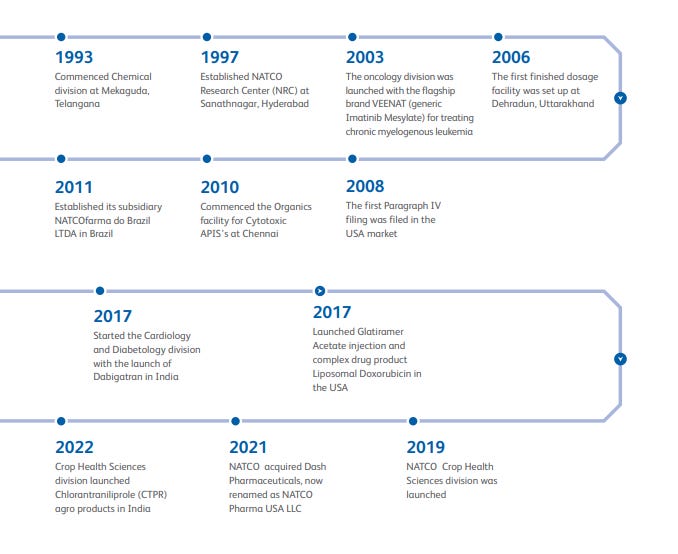
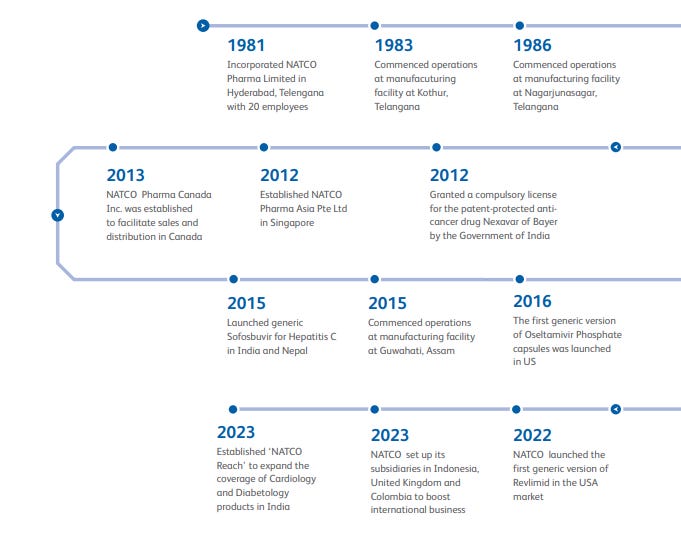
Natco Pharma Limited was founded in 1981 by V.C. Nannapaneni in Hyderabad, India. It started as a small pharmaceutical company and has grown into one of India's leading players in the pharmaceutical industry, focusing on niche therapeutic areas and complex products.
Today, Natco Pharma has a strong global presence, exporting products to over 50 countries, including regulated markets like the U.S., Europe, Canada, and Australia. The company continues to focus on complex generics, oncology, and specialty pharmaceuticals, maintaining its reputation for innovation and affordable medicines.
GENERIC DRUGS
Natco Pharma primarily focuses on developing generic drugs, particularly targeting drugs that are in high demand and sold at high prices. The company leverages opportunities arising from patent expirations to introduce affordable generic versions of these drugs.
Natco also strategically utilizes the exclusivity period granted for certain generic launches, enabling it to capture a significant market share and generate substantial profits during this window. This approach allows the company to provide cost-effective alternatives while maintaining a strong competitive edge in the pharmaceutical market.
THE BLOCKBUSTER GENERIC DRUGS OF NATCO
1. Gleevec (Imatinib Mesylate) - Natco introduced a generic version of this drug, widely used for treating chronic myelogenous leukemia (CML) and other types of cancers. This launch strengthened Natco’s presence in the oncology segment.
2. Revlimid (Lenalidomide) - Natco successfully launched a generic version of this drug, primarily used in the treatment of multiple myeloma and certain types of lymphoma. This achievement marked a significant milestone in Natco’s efforts to make advanced cancer treatments more affordable.
3. Sovaldi (Sofosbuvir) - Natco introduced a generic version of this breakthrough antiviral medication, used for the treatment of hepatitis C. The launch demonstrated Natco’s capability to deliver cost-effective solutions for critical diseases.
4. Copaxone (Glatiramer Acetate) - Natco launched a generic version of Copaxone, a drug widely prescribed for the treatment of multiple sclerosis (MS). This further expanded Natco’s footprint in the neurology segment.
5. Abilify (Aripiprazole) - Natco developed and launched a generic version of this antipsychotic medication, used to treat schizophrenia, bipolar disorder, and depression-related symptoms. This move reinforced Natco’s presence in the central nervous system (CNS) market.
THE FLUCTUATION OF DRUGS
Gleevec
Revlimid
Sovaldi
Copaxone
Abilify
These drugs present both opportunities and challenges for Natco Pharma. While they initially generate significant revenue upon launch—especially during the exclusivity period—this revenue stream is not sustainable in the long term.
As patent protections expire and market exclusivity ends, more competitors enter the market with their own generic versions, leading to price erosion and a decline in market share. Consequently, the revenue generated from these drugs tends to diminish over time. After that, the company needs to be ready for what’s next.
This cyclical pattern is a well-known phenomenon across the pharmaceutical industry. As competition increases and market exclusivity ends, revenue from existing drugs tends to decline over time.
By 2021, many of Natco’s blockbuster generic drugs, such as Sovaldi and Abilify, faced intense competition from other generics entering the market. This increased competition led to market share erosion and price reductions, which negatively affected Natco’s revenues, But Natco's strong pipeline, effective execution, and strategic drug launches have helped the company maintain consistent revenue growth over the years. In the case of Natco Pharma, the company has demonstrated strong performance in the past by successfully launching generic drugs, leveraging opportunities arising from patent expirations and market exclusivity.
Natco has maintained a healthy sales CAGR growth of approximately 14% over the years, supported by its robust product pipeline and focus on high-demand therapies. Notably, in the last three years, the company has achieved an impressive sales CAGR growth of around 25%, reflecting its ability to capitalize on market opportunities and expand its portfolio effectively.
DIVERSIFICATION
NATCO PHARMA HAS BEEN DIVERSIFIED THEIR PORTFOLIO INTO
Oncology
Diabetology
Cardiology
Crop Science
In the current quarter they made a investment of US$ 8 million in eGenesis, Inc., a biotechnology company focused on xenotransplantation and developing safe and effective human-compatible organs for transplant.
Oncology sales in FY24: ₹216.6 crore
Non-oncology sales in FY24: ₹170.7 crore
Export formulation sales in FY24: ₹3,236.9 crore
Domestic formulation sales in FY24: ₹386.7 crore
The Q2 FY25 report of Natco Pharma offers valuable insights into the company's future pipeline and highlights how it is poised to drive growth in the coming years. Let’s dive into the Q2 FY25 analysis of Natco Pharma to better understand its strategic initiatives and growth prospects.
Q2 ANALYSIS
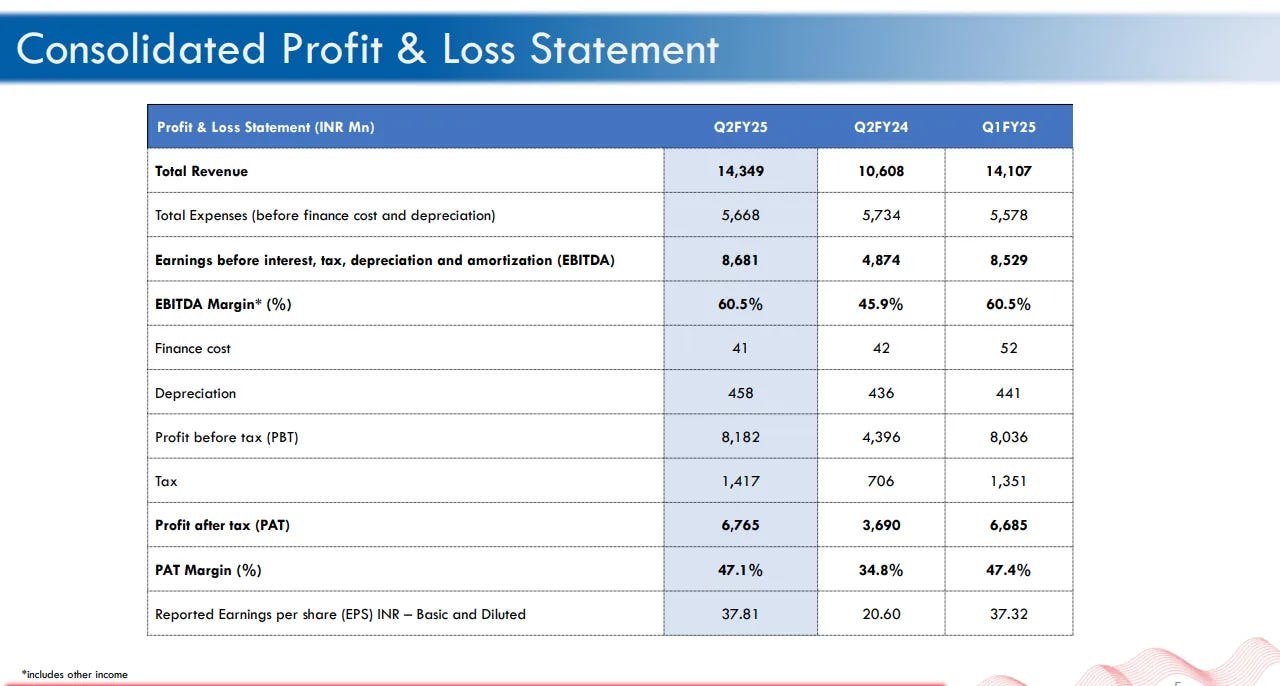
The company's total revenue increased by 1.7% QoQ and showed a strong growth of 35.3% YoY. The EBITDA margin for the current quarter stands at 60.5%, a significant improvement from 45.9% in the same quarter of the previous year. However, the Profit After Tax (PAT) declined slightly by 1.18% QoQ but demonstrated an impressive increase of 83.33% YoY. The PAT margin for the current quarter is 47.1%, compared to 34.8% in the corresponding quarter of the previous year, reflecting robust profitability growth.
The company has delivered strong financial performance this quarter. Now, let's delve into Natco's future plans, explore its product pipeline, and analyze how these initiatives are expected to impact its growth trajectory.
FUTURE
Revlimid: Natco Pharma’s revenues for FY24 saw a significant boost from the sales of generic Revlimid (lenalidomide), which the company markets globally. This product made a substantial contribution to Natco’s export formulations revenue, amounting to approximately ₹32,369 million, accounting for about 78% of the total revenue. However, concerns have arisen regarding potential price erosion for Revlimid. Addressing these speculations, Rajeev Nannapaneni, MD and CEO of Natco Pharma, confirmed that the company still retains a one-third market share for Revlimid.
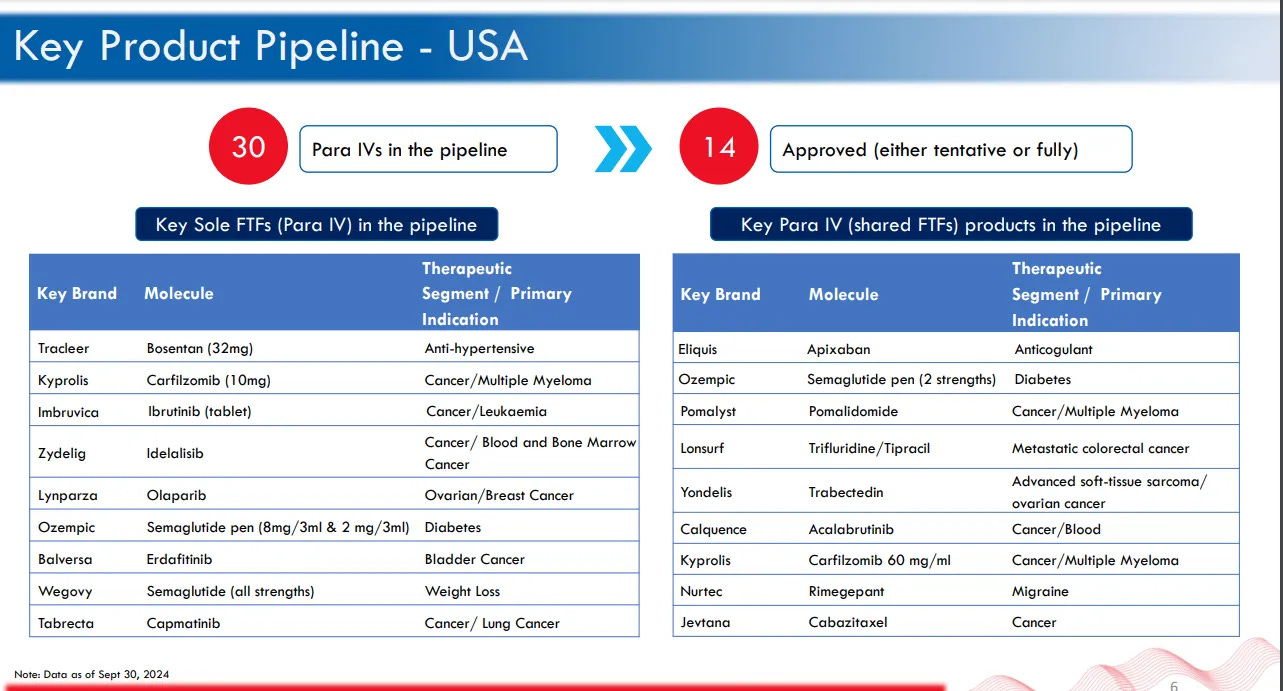
Pipeline and Future Outlook: The key question now is, what's next for Natco? Among its most promising drugs in the pipeline is olaparib, though its approval and launch may take approximately 1.5 years as it remains in process. Additionally, erdafitinib and capmatinib are still in their early stages of development.
In the short term, the biggest opportunity lies with semaglutide, alongside smaller but significant filings such as carfilzomib (10 mg) and bosentan (32 mg). Notably, Natco has been actively investing in its future growth, with R&D spending totaling 8% to 10% of sales in FY24.
Natco’s future pipeline includes several high-potential drugs:
Semaglutide (short-term opportunity)
Olaparib (a first-to-file opportunity shared 50:50 with Alembic)
Erdafitinib and capmatinib (longer-term prospects)
The company’s robust R&D pipeline, coupled with its strategic focus on high-value products, positions it well for sustainable growth in the coming years.
VALUATION
Valuation: Natco Pharma is currently trading at a P/E ratio of 13.2, significantly below its 5-year median P/E of 26.3. This suggests that the stock is trading at a discount relative to its historical valuation, indicating it may be undervalued based on past trends.
PHARMA SECTOR
In the pharma sector, excluding blockbuster products or moat-generating drugs, the business typically struggles to sustain significant growth. This is the inherent nature of the industry. Therefore, the first principle when analyzing a pharma company is to evaluate its future pipeline and assess the initiatives it is undertaking to secure long-term growth.
The pharmaceutical business operates on a "expiry and revival" model, where revenues from existing drugs eventually decline due to patent expirations and competition, necessitating new product launches to drive growth. For instance, Natco Pharma’s current revenue is heavily reliant on Revlimid, but it’s important to recognize that Revlimid cannot sustain the same growth trajectory for the next decade. This underscores the critical need to analyze the company’s upcoming drugs and estimate the revenue potential they could generate if successfully approved.
Looking at Natco Pharma, their strategic focus on a robust pipeline and long-term growth initiatives is commendable. However, the ultimate success will hinge on the performance of their upcoming drugs. Investors should closely monitor the progress of these developments to evaluate the company’s future potential.
{Caution: This article is for educational purposes only, Please consult a SEBI-registered investment advisor before making any investment decisions. This analysis is solely aimed at teaching the fundamentals of company analysis. }